
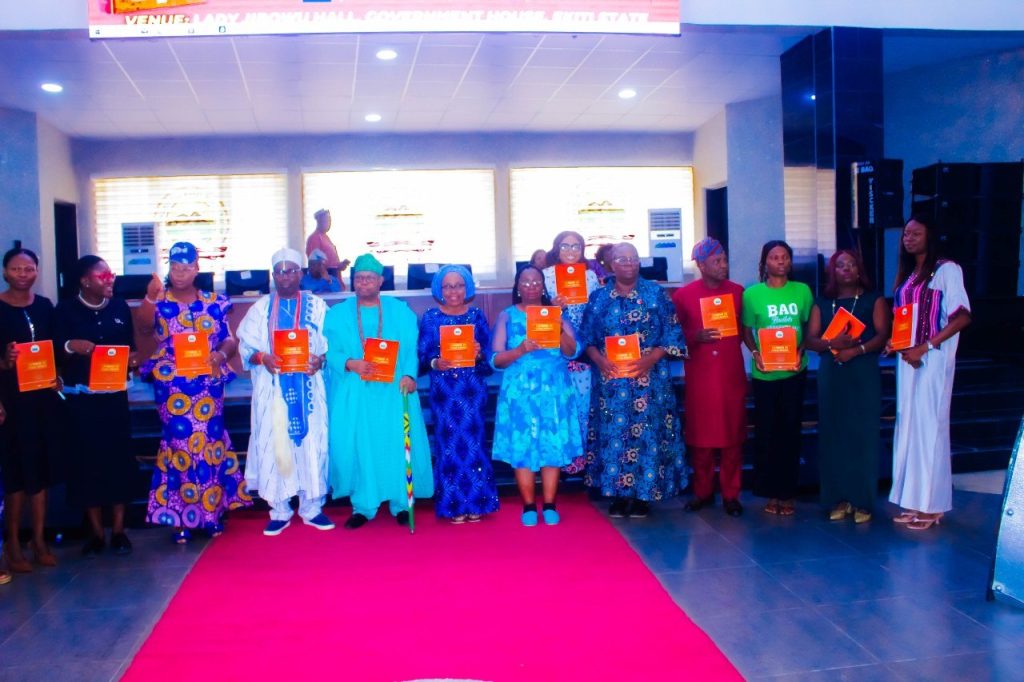

The Wife of the Ekiti State Governor, Dr Olayemi Oyebanji, says the newly unveiled State Policy on Gender in Education will provide a clear framework to ensure that schooling remains a right and not a privilege for every child in the State.
Speaking in Ado-Ekiti at the launch of the policy and its implementation guidelines, Dr Oyebanji said the initiative was designed to remove systemic barriers and guarantee equal access to quality education across the state.
Represented by the State Commissioner for Women Affairs, Mrs Olapeju Babafemi, the Wife of the Governor said the policy moves beyond rhetoric by setting out practical steps to drive implementation.
“Education remains one of the most powerful tools for transforming lives and advancing sustainable development,” she said. “This policy ensures that no child, regardless of gender, is left behind.”
In her remarks, the Commissioner for Education, Dr Adebimpe Aderiye, described the policy as a strategic instrument to secure the future of children in the state.
She said it provides a structured pathway for strengthening gender-responsive teaching, improving learning environments and ensuring that pupils not only enrol but complete their education.
Aderiye also pointed to ongoing investments by the governor, Biodun Oyebanji, including teacher recruitment, infrastructure upgrades and improved welfare, as critical to sustaining progress in the sector.
The Commissioner for Information, Rt Hon. Taiwo Olatunbosun, said the success of the policy would depend on collective action by stakeholders, including parents, educators and community leaders.
Olatunbosun, who spoke through the ministry’s Acting Permanent Secretary, Mrs Adesola Fadiran, lauded the progress recorded in the secondary education sector, particularly under the AGILE programme.
In her remarks, the Special Adviser to the Governor on Special Education and Social Inclusion, Princess Adetoun Agboola, said the framework reinforces inclusiveness by ensuring that children with special needs and those at risk of exclusion have access to safe and supportive learning environments.

Also, the Senior Special Assistant to the Governor on Student Affairs, Modupe Adetiba, said the policy reflects the aspirations of students and would boost confidence in the education system.
Earlier, the AGILE Project Coordinator, Mrs Yewande Adesua, said the initiative is expected to increase enrolment, equip adolescents with life skills and position education as a driver of social transformation.
She added that the implementation guidelines provide a roadmap for improving retention and completion rates.
A member of the policy drafting committee, Mrs Shirley Atane, said the framework guarantees equitable access from early childhood to tertiary education while enforcing strict measures against gender-based violence and discrimination.
Comrade Sola Adigun, Chairman of the Academic Staff Union of Secondary Schools, welcomed the policy but urged that equal attention be given to both boys and girls.
Developed in partnership with the World Bank and the Adolescent Girls Initiative for Learning and Empowerment (AGILE), the policy adopts a zero-tolerance approach to discrimination, gender-based violence and exclusion within schools.
Officials said the AGILE programme has supported the renovation of more than 1,000 classrooms, the provision of 59 boreholes and financial assistance to 2,808 indigent students across 203 schools, alongside efforts to equip girls with digital skills.
The policy’s unveiling marks a significant step in Ekiti’s efforts to build a more inclusive and equitable education system.